
Read the full article by Tom Perkins (The Guardian).
“Levels of some of the most dangerous Pfas compounds have dramatically fallen in Canadian seabird eggs, which the authors of a new peer-reviewed study say illustrates how regulations are effective.
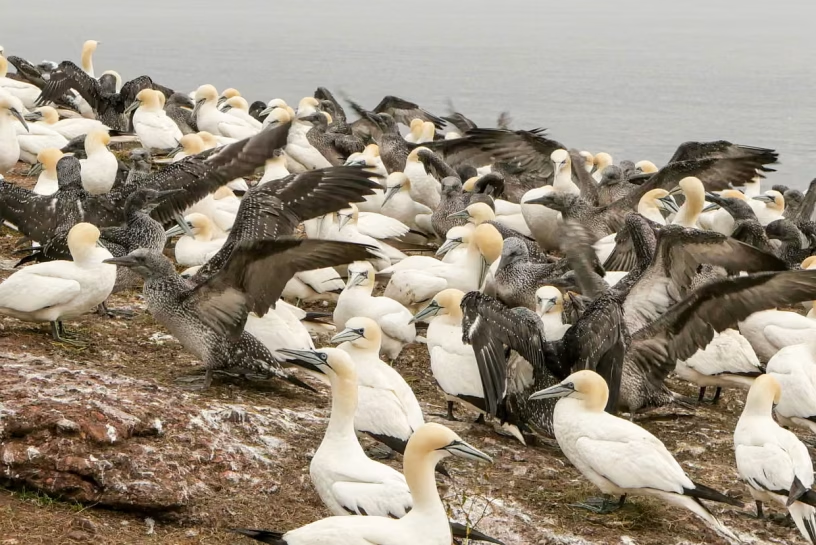
Researchers looked at Pfas levels in the eggs of northern gannets in the St Lawrence Seaway basin over a 55-year period. Pfas levels shot up from the 1960s through the peak of the chemicals’ use in the late 1990s and early aughts, then fell.
The fall coincides with several developments – facing regulatory scrutiny, the chemical giant 3M, which is one of the largest producers of Pfas, began moving away from Pfos, among its most common and toxic compounds. By 2015, major chemical makers reached an agreement with the US Environment Protection Agency to phase out Pfos and Pfoa, the latter a similarly problematic compound.
Raphael Lavoie, a co-author and ecotoxicologist with Environment and Climate Change Canada, called the findings ‘good news'”…